Flagship Deployment · Physical AI & Edge DSP
• Guided by CTO Tejas Jayaraman & Dr. Veena Mayya (MIT Manipal)
✓ Operational on Factory Floor
AI-Based Acoustic Motor Fault QA & XAI Pipeline
Automated acoustic quality assurance system for automotive electric window motors. Converted 8-second operational sound cycles into 224×224 Mel-spectrograms via STFT, benchmarked 6 architectures to resolve a 1D embedding bottleneck, and deployed a MobileNetV2 classifier with Grad-CAM explainability achieving 100% defect recall at ~45ms edge latency.
Fault Recall
100.0%
38/38 Defective Motors Caught (0 Escapes)
Edge Latency
~45ms
MobileNetV2 on Factory Floor Compute
Validation Acc
84.62%
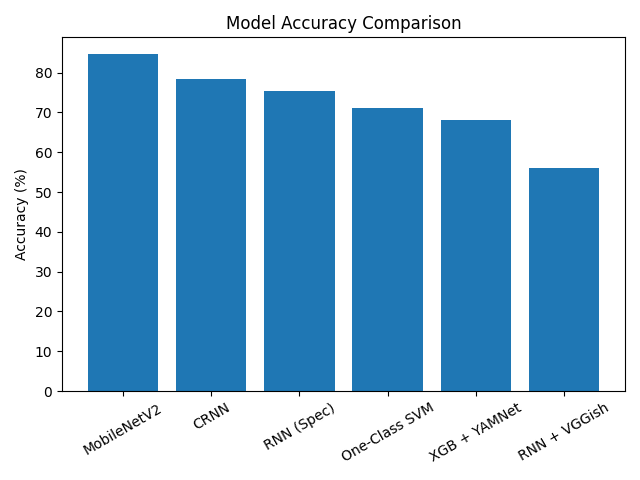
Outperformed CRNN (78.5%) & XGBoost (68%)
Industrial Dataset
312 Units
Semi-Anechoic Chamber @ Plant
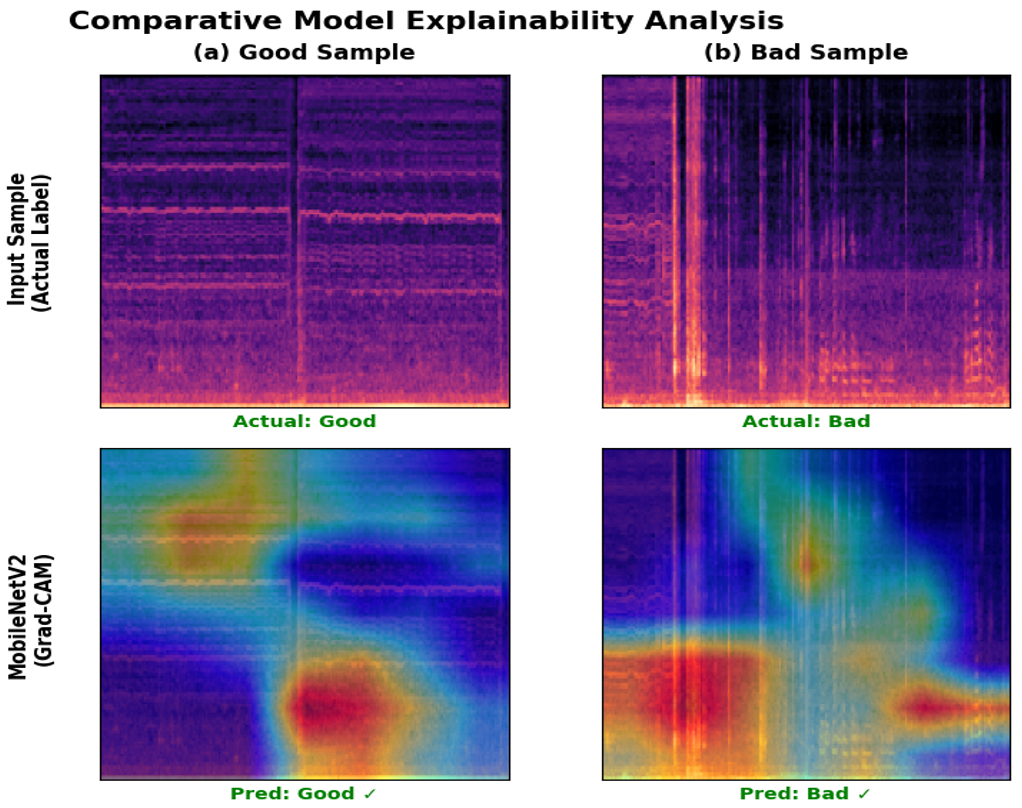
Production Apparatus & Explainability Artifacts (Click to Enlarge)
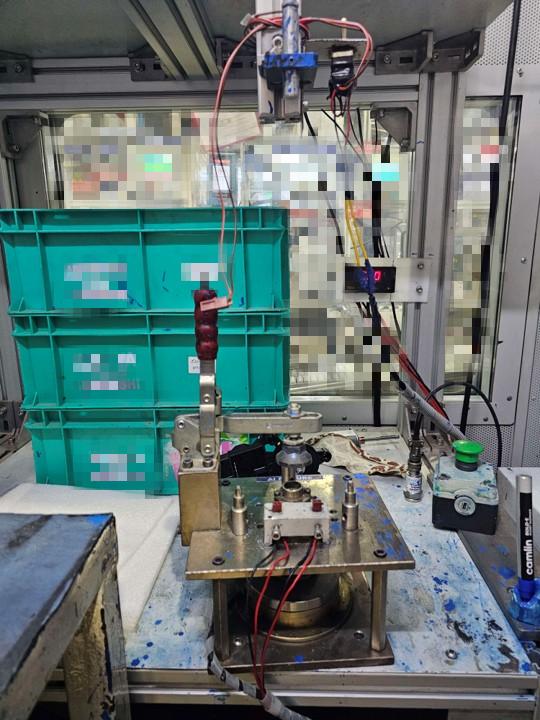
Testing Environment — Semi-anechoic enclosure with GRAS 46AE mic &
pneumatic jig at manufacturing plant.
Grad-CAM Explainability — Proving model activates on true bearing
impulses rather than factory ambient noise.
Architecture Benchmark — Visual-acoustic 2D spectrograms resolved the 1D
latent embedding bottleneck.
- Physical Data Acquisition: Designed the shop-floor testing protocol in a semi-anechoic enclosure using a calibrated GRAS 46AE free-field microphone, capturing 8-second forward and reverse cycles under mechanical load.
- Visual-Acoustic DSP Pipeline: Converted 44.1 kHz WAV recordings into 224×224 log-Mel spectrograms via STFT (2048 window, 512 hop, Hann window, 128 Mel bands) to isolate abnormal bearing rotation (ABR) and internal wear conditions (WC).
- Edge Architecture Benchmarking: Resolved a 1D embedding bottleneck (where VGGish/YAMNet plateaued at 56–72% accuracy) by fine-tuning MobileNetV2 with spatial transfer learning, achieving 84.62% multi-class accuracy, 0.84 F1, and 100% defect recall at ~45ms inference latency.
- Gradient-Based Explainability (XAI): Integrated Grad-CAM heatmaps to verify that neural activations localized to genuine bearing raceway impulse frequencies rather than transient factory noise.